This Is How Tahiti’s Capital Paints a Wild Urban Canvas
You know that feeling when a city surprises you with raw beauty and color? Papeete, Tahiti, hit me like a wave of paint—vibrant street art, bustling markets alive with rhythm, and ocean-kissed architecture blending tradition and chaos. I didn’t expect art to explode from every corner of this Pacific capital. Instead of quiet postcard views, I found a living, breathing cityscape where culture and creativity collide. Let me take you through the real, unfiltered soul of urban Tahiti.
First Impressions: A City That Doesn’t Play It Safe
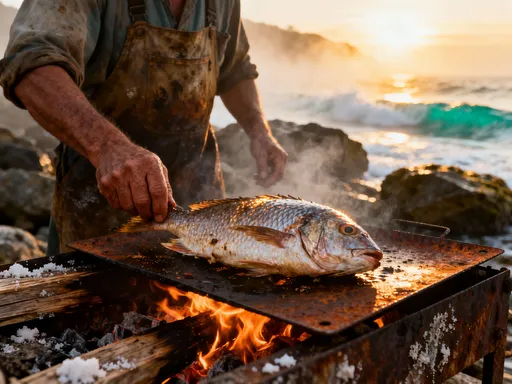
Arriving in Papeete is not like stepping into a glossy travel brochure. There are no hushed lagoons or silent palm groves greeting visitors at the port. Instead, the city announces itself with noise, movement, and a riot of color. The first thing you notice is the scent—frangipani tangled with salt air, wood smoke, and the sharp sizzle of grilled fish from roadside stands. Music spills from open windows: rhythmic drumming, ukulele melodies, and the steady pulse of traditional Polynesian chants mixed with modern island reggae. This is not a city that softens its edges for tourists.
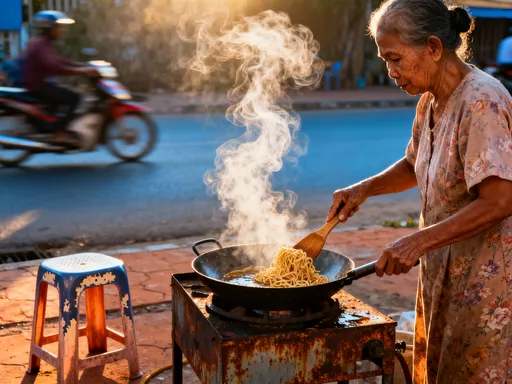
The streets pulse with life. Men in bright pareus stride past women balancing baskets of fruit on their heads. Scooters weave through traffic, their riders often barefoot, moving with the kind of ease that comes from knowing every pothole and shortcut. Buildings wear their years proudly—peeling paint, rusted iron roofs, and laundry strung between balconies. But within this seemingly chaotic surface lies a deep sense of order, of community, of cultural continuity. Papeete refuses to be reduced to a stereotype of tropical serenity. It is urban, unapologetic, and vibrantly alive.
For many travelers, island capitals are expected to be calm gateways to paradise, mere transit points before retreating to overwater bungalows. But Papeete defies that expectation. It is not a backdrop—it is the main character. The city’s energy is infectious, its authenticity refreshing. Here, urban life isn’t separate from nature or tradition; it is an extension of both. The ocean is never far, the mountains loom in the distance, and the people move with a rhythm that feels both modern and ancient. This is not a place to escape to—it is a place to engage with.
The Street Art Pulse: Murals That Tell Stories
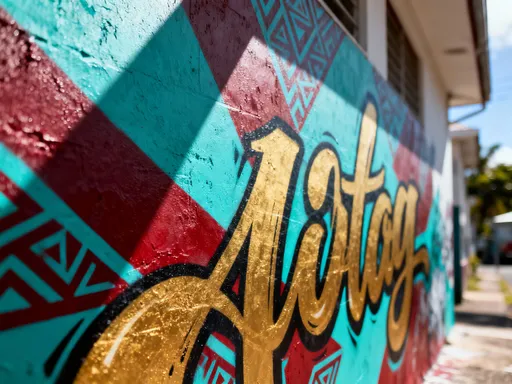
If you walk through the narrow lanes of Fautaua or wander the outskirts of Arue, you’ll find walls transformed into open-air galleries. Papeete’s street art is not a borrowed trend from global cities—it is a homegrown movement, deeply rooted in Polynesian identity. These murals are not just decorative; they are declarations. They speak of ancestry, of resistance, of pride. A massive painting on the side of a community center might depict Oro, the ancient god of war and fertility, his body adorned with traditional tatau patterns. Another mural in a quiet alley shows a mother holding a child beneath a tree of life, its roots stretching into the ocean, symbolizing connection to land and sea.
The artists behind these works are often local, trained not in formal academies but in the streets, in the stories passed down by elders. Their tools are spray cans and brushes, but their inspiration comes from oral histories, sacred chants, and the living pulse of Tahitian culture. What makes this art so powerful is its purpose. It is not created for Instagram likes or gallery sales. It is created to remind people who they are, especially in the face of rapid change. One mural in downtown Papeete shows a coral reef bleeding into concrete, a stark commentary on coastal development and environmental degradation. Another portrays a young girl wearing a school uniform, her face overlaid with traditional facial tattoos, asking viewers to consider the future of cultural identity.
The visual language of these murals blends ancient and modern. Traditional Polynesian motifs—geometric waves, shark teeth, spearheads—are reimagined with bold colors and graffiti-style lettering. The influence of Māori and Hawaiian art is visible, but the voice is distinctly Tahitian. These walls are not silent. They speak in a language of color and form, accessible to everyone, especially children who grow up seeing their heritage celebrated in public spaces. In a world where indigenous cultures are often pushed to the margins, Papeete’s street art insists on visibility, on presence, on pride.
Marché de Papeete: The Living Palette of Daily Life
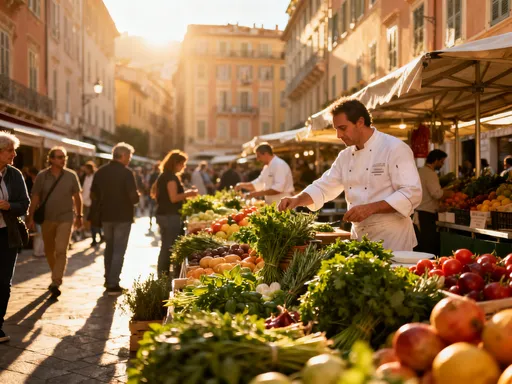
No visit to the city is complete without stepping into the Marché de Papeete, a sprawling marketplace that serves as both economic heart and cultural masterpiece. From the outside, it looks like a cluster of low buildings under faded canvas roofs. But inside, it is a sensory explosion. The air hums with voices—vendors calling out prices, friends catching up, tourists asking questions. The colors are overwhelming: pyramids of mangoes, pineapples, and noni fruit in shades of gold, green, and crimson. Bundles of vanilla beans lie next to baskets of taro root, their earthy scent mingling with the sweetness of ripe papaya.
The fabric stalls are a feast for the eyes. Rows of pareus—Tahiti’s iconic wraparound garments—hang like flags, each one a unique design. Some feature tropical flowers, others depict ocean currents or mythological creatures. Women sit on low stools, folding and refolding the fabric with practiced hands, arranging them so that the colors flow into one another like a painting. It’s not just about selling—it’s about presentation, about beauty in the everyday. Even the fish section is artful. Silver tuna and red snapper lie on beds of ice, their scales catching the light. Vendors use coconut shells as scoops, their hands moving quickly as they clean and portion the catch.
But the market is more than a place to shop. It is a stage for daily life. Elders sit on benches, sipping coconut water and watching the world go by. Children dart between stalls, laughing. Tourists take photos, but the real story is in the interactions—the bartering, the shared jokes, the occasional song that breaks out among vendors. The market is democratic. Everyone is welcome, everyone participates. It is here that the city’s soul is most visible—not in polished museums or luxury resorts, but in the rhythm of commerce, community, and creativity. The Marché de Papeete is not just a market. It is a living canvas, repainted every day.
Urban Architecture Meets Nature: A Fusion of Forms
One of the most striking things about Papeete is how its architecture refuses to dominate the landscape. Unlike cities that impose rigid grids and steel towers, Papeete grows with the land. Colonial-era buildings with wide verandas and shuttered windows stand beside modern concrete structures, but even these feel temporary, as if the jungle might reclaim them at any moment. Bougainvillea spills over balconies in cascades of magenta and orange. Hibiscus grows through cracks in the pavement. The city breathes.
Buildings are designed to welcome the elements. Windows are large, often without glass, allowing ocean breezes to flow freely. Roofs slope steeply to handle tropical rains, and many homes incorporate open-air spaces where families gather in the evenings. Even government buildings have a relaxed, porous quality. The Catholic cathedral in the city center is a perfect example—its Gothic spires rise above the skyline, but the roof is partially thatched with palm fronds, and the interior is cooled by cross-ventilation rather than air conditioning. This is not a clash of styles, but a thoughtful fusion.
The relationship between architecture and nature is not just aesthetic—it is practical and spiritual. Traditional Tahitian homes, or fare, were made from wood, thatch, and woven leaves, designed to be light, airy, and easily dismantled. While modern materials have replaced some of these, the philosophy remains. Buildings are not meant to shut out the world but to invite it in. The sound of waves, the smell of rain on hot pavement, the sight of birds nesting in eaves—these are not distractions. They are part of daily life. In Papeete, urban design doesn’t fight nature. It listens to it, learns from it, and lives alongside it.
Where Art Lives Beyond Galleries: Hidden Creative Corners
In most cities, art is confined to museums, galleries, and performance halls. In Papeete, it spills into the streets, the sidewalks, the buses. Just outside the port, near the waterfront promenade, there’s a small sculpture park made entirely from reclaimed wood and coral stone. The pieces are abstract, yet they evoke ocean forms—waves, shells, fish tails. Children climb on them, elders sit beside them, and tourists pause to take photos. There are no signs saying “Do not touch.” The art is meant to be part of life, not locked away.
Across town, in a repurposed shipping container near the bus depot, a community art studio hums with activity. Local teenagers learn to carve wood under the guidance of a master artisan. On weekends, the space transforms into a pop-up gallery, where paintings, woven baskets, and handmade jewelry are displayed on folding tables. There’s no admission fee, no curator, no pretense. It’s art by the people, for the people.
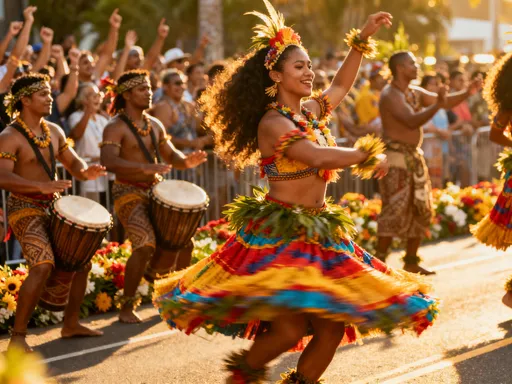
And then there are the dance rehearsals. In the late afternoons, groups gather in public plazas, their bare feet slapping against concrete as they practice traditional otea dances. The drumming is loud, the movements precise and powerful. Tourists stop to watch, but the dancers rarely perform for an audience. They dance to stay connected—to their history, to each other, to the rhythm of the island. These moments are not staged. They are real, unscripted, and deeply moving. In Papeete, art is not something you go to see. It is something you live with, walk through, and become part of.
Challenges and Resilience: Art in the Face of Change
Papeete, like all coastal cities, faces growing threats. Rising sea levels are eroding shorelines. Tourism brings income but also pressure to commodify culture. Modernization risks replacing traditional practices with imported norms. Yet, rather than retreat, the city’s artists are responding with creativity and courage. Eco-art installations made from recycled plastic bottles appear in public parks. Sculptures crafted from driftwood and coral debris stand as memorials to vanishing marine life. Murals on public buildings call for action—protect the reefs, honor the ancestors, speak the language.
One powerful example is the annual “Art & Ocean” festival, where local and international artists collaborate on large-scale works that highlight environmental issues. A recent installation featured a life-sized whale made entirely from discarded fishing nets, its body suspended over the marketplace. It was haunting, beautiful, and impossible to ignore. These projects do more than raise awareness—they strengthen community. They bring people together to clean beaches, to paint walls, to share stories. Art becomes a form of resistance, not through protest, but through presence.
The resilience of Papeete’s creative spirit lies in its adaptability. Culture is not frozen in time. It evolves. Young artists mix digital media with traditional chants. Fashion designers blend modern silhouettes with ancient patterns. The city does not reject progress—it redefines it on its own terms. This is not about preserving the past, but about ensuring that the future still carries the soul of Tahiti. In the face of change, art is not a luxury. It is a necessity.
Why Papeete’s Cityscape Matters: Redefining Island Urbanism
Papeete challenges the way we think about island capitals. Too often, they are seen as sleepy waystations, charming but insignificant. But this city proves that urban life in the Pacific can be bold, complex, and deeply cultural. It is not a contradiction to have a vibrant city in the middle of paradise. It is a testament to the richness of Polynesian civilization. Papeete is not trying to be Paris or Sydney. It is proudly, unapologetically itself.
Its beauty lies not in perfection, but in authenticity. The cracked sidewalks, the faded murals, the crowded market stalls—these are not flaws. They are signs of life. They tell stories of resilience, creativity, and community. When travelers come to Tahiti, they should not skip the capital to rush to the beaches. They should start there. Because in Papeete, you don’t just see culture—you feel it in the rhythm of the streets, hear it in the music, taste it in the food, and see it in the colors that cover every wall.
This is a city that refuses to be quiet, to be polished, to be tamed. It is a wild urban canvas, painted daily by its people. And in that chaos, there is profound beauty. Papeete reminds us that cities can be more than concrete and traffic. They can be living works of art, shaped by history, nature, and the human spirit. So the next time you think of Tahiti, don’t just picture a lagoon. Picture a mural. Picture a market. Picture a city that paints its soul for all to see.