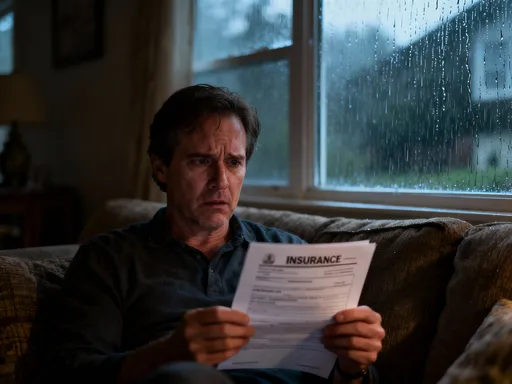
Why Home Insurance Feels Like a Trap — And How to Dodge the Pitfalls
You pay your home insurance every month, thinking you're safe—until you file a claim and realize half your coverage doesn’t apply. I’ve been there. What seemed like solid protection turned into a maze of loopholes and fine print. Many homeowners don’t discover the real gaps until it’s too late. This isn’t just about paying premiums—it’s about knowing what you’re paying for and where the risks still lurk. Let’s unpack the hidden flaws in the system and how to protect your biggest asset the smart way.
The False Sense of Security Behind Home Insurance
Home insurance is marketed as peace of mind, a financial shield against the unexpected. For many families, purchasing a policy feels like closing the final chapter on homeownership anxiety. But beneath the surface of that comfort lies a troubling truth: most people are protected only in theory, not in practice. The phrase “full coverage” is frequently used in sales conversations, yet it carries no standardized definition. What one insurer labels comprehensive, another might consider bare minimum. This lack of clarity allows a false sense of security to take root, leading homeowners to believe they’re fully shielded when, in fact, they’re exposed to significant uncovered risks.
Standard home insurance policies typically cover damage from events like fire, windstorms, lightning, and vandalism—known as “named perils.” However, the list of exclusions is often longer than the list of protections. Floods, for example, are almost universally excluded from standard policies, even though water-related damage is among the most common and costly threats to homes. Earthquakes, landslides, and sewer backups also fall outside typical coverage. Yet, because these risks aren’t always top of mind, especially in regions where they’re less frequent, policyholders rarely question their absence. The assumption that “insurance means protection” overrides the need to scrutinize what is—and isn’t—included.
The difference between named-peril and all-risk policies further complicates the picture. Named-peril policies only cover what is explicitly listed, while all-risk (or open-peril) policies cover everything except what is specifically excluded. While the latter offers broader protection, it’s not automatically standard. Many homeowners unknowingly hold named-peril policies, assuming their policy covers all accidents or disasters. When a loss occurs from a cause not on the list, the claim is denied, leaving families to shoulder the financial burden. This mismatch between expectation and reality is where the illusion of safety begins to crack.
Marketing materials often emphasize the breadth of coverage while downplaying limitations. Brochures may feature images of families rebuilding after a storm, suggesting total recovery is guaranteed. But these visuals rarely come with footnotes explaining that flood damage from rising water isn’t covered, or that mold resulting from slow leaks is considered maintenance neglect. The emotional appeal of safety overshadows the technical details, making it easy for consumers to overlook the fine print. The result? A widespread belief that home insurance is a one-size-fits-all solution, when in reality, it’s a highly conditional contract that rewards careful reading and proactive planning.
The Hidden Exclusions That Catch People Off Guard
Even policies that appear thorough contain exclusions buried in dense legal language. These exclusions are not just minor footnotes—they can represent the difference between full recovery and financial disaster. One of the most common surprises involves water damage. While sudden incidents like a burst pipe are usually covered, damage from long-term leaks, condensation, or mold growth often is not. Insurers classify these as maintenance issues, arguing that homeowners should have addressed them before they escalated. The distinction may seem logical in theory, but in practice, it leaves families stranded when a hidden leak in the basement wall leads to thousands of dollars in structural and remediation costs.
Sewer backup is another glaring gap. A clogged municipal line or overwhelmed septic system can flood a home with contaminated water, ruining flooring, drywall, and appliances. Yet, this peril is typically excluded unless a specific endorsement is purchased. Many homeowners are unaware such a rider exists until they experience a backup and file a claim—only to be told the damage isn’t covered. The cost of cleanup and repairs can exceed $10,000, a burden that could have been avoided with a relatively inexpensive add-on policy costing as little as $50 to $100 per year.
Flood insurance presents a similar disconnect. Despite being one of the most destructive natural hazards, it is not included in standard home insurance. Federal flood insurance, administered through the National Flood Insurance Program (NFIP), is available, but uptake remains low—even in moderate-risk zones. Some homeowners assume their mortgage lender will require it only if they’re in a high-risk area, but changing weather patterns and rising sea levels are expanding flood zones. A storm that once would have caused minor runoff can now lead to basement flooding miles from a riverbank. Without flood coverage, homeowners face out-of-pocket costs that can exceed their deductible by tenfold.
Other exclusions include damage from pests, such as termites or rodents, and general wear and tear. These are deemed preventable through regular upkeep, but the line between accident and neglect can be blurry. A roof that fails during a windstorm might be covered—unless the adjuster determines it was already weakened by age or poor maintenance. In such cases, the insurer may pay only a fraction of the claim, citing depreciation and pre-existing conditions. These decisions often come as a shock, especially when the homeowner has diligently paid premiums for years, believing they were fully protected.
Underinsurance: Why Market Value Doesn’t Equal Rebuild Cost
One of the most serious financial oversights in home insurance is underinsurance—carrying a policy limit that falls short of the actual cost to rebuild the home. Many homeowners base their coverage amount on the property’s market value, assuming it reflects replacement cost. But market value is influenced by location, school districts, and local demand—factors that have nothing to do with construction expenses. The true cost of rebuilding depends on materials, labor rates, permits, and design complexity, all of which can far exceed the home’s selling price.
For example, a house valued at $400,000 on the market might cost $550,000 or more to rebuild due to high lumber prices, skilled labor shortages, or updated building codes requiring seismic retrofits or energy-efficient materials. If the homeowner is insured for only $400,000, they would be responsible for the $150,000 shortfall—an amount that could devastate family finances. This gap is not hypothetical; studies show that up to 30% of homes in the U.S. are underinsured, often by 20% or more.
Inflation and supply chain disruptions have worsened the problem in recent years. The cost of construction materials has fluctuated dramatically, and labor remains in high demand. A policy that was adequate five years ago may now fall dangerously short. Yet, many insurers do not automatically adjust coverage limits for inflation unless riders are added. Homeowners who set their policy and forget it are at risk of being underinsured without even realizing it.
To avoid this, homeowners should use replacement cost estimators provided by insurers or third-party tools that factor in local construction costs. Some companies offer guaranteed or extended replacement cost coverage, which pays above the policy limit if rebuilding costs surge unexpectedly. While these options come with slightly higher premiums, they provide critical protection against cost overruns. Regular policy reviews—at least every two to three years—are essential to ensure coverage keeps pace with changing economic conditions and home improvements.
The Claims Process: Where Promises Fall Apart
Filing a claim should be the moment insurance delivers on its promise. Yet, for many, it becomes a frustrating ordeal marked by delays, disputes, and unexpected denials. The process begins with reporting the loss, but from there, homeowners enter a world of adjusters, documentation, and fine-print interpretations. Insurance companies employ claims adjusters to assess damage, estimate repair costs, and determine payout eligibility. While these professionals are trained to be objective, their assessments often favor the insurer’s bottom line.
Depreciation is a key factor in reducing payouts. Most policies offer two types of coverage for personal property: actual cash value (ACV) and replacement cost value (RCV). ACV takes depreciation into account, meaning older items are reimbursed at a fraction of their original cost. A five-year-old television or sofa may receive only 30% to 50% of its replacement price. Even with RCV coverage, reimbursement often comes in two parts: an initial payment based on ACV, followed by a second payment after the item is replaced. This requires homeowners to pay out of pocket first, creating cash flow challenges during an already stressful time.
Disputes over cause of loss are another common hurdle. If a roof collapses during a snowstorm, the insurer may agree it’s covered. But if the adjuster finds signs of prior damage or inadequate maintenance, the claim could be reduced or denied. Similarly, water damage from a storm may be covered, but if mold is discovered weeks later, the insurer might argue it resulted from delayed remediation, not the initial event. These distinctions can feel arbitrary to homeowners who simply want to restore their homes.
Perhaps most troubling is the long-term impact of filing a claim. Even a single claim can trigger a premium increase of 10% to 20%, and multiple claims may lead to non-renewal. Some insurers use claims history as a red flag, viewing frequent filers as higher risk. As a result, many homeowners hesitate to file legitimate claims for fear of losing their policy or facing unaffordable rates. This creates a perverse incentive to absorb smaller losses themselves, undermining the very purpose of insurance.
Bundling and Loyalty Traps: When Discounts Backfire
Insurers heavily promote bundling home and auto policies as a way to save money—often advertising discounts of 15% to 25%. On the surface, this seems like a smart financial move. Combining policies simplifies billing, reduces paperwork, and lowers premiums. But over time, this convenience can become a financial trap. Long-term customers often pay more than new customers with similar profiles, a phenomenon known as “price optimization.” Insurers rely on customer inertia, assuming that once a household is bundled, they’re less likely to shop around.
Studies have shown that loyalty is rarely rewarded in the insurance industry. In fact, the best rates are typically offered to new customers. A homeowner who has stayed with the same insurer for ten years may be paying hundreds of dollars more annually than a neighbor who recently switched. The bundling discount may mask this disparity, making it appear as though savings are being realized when, in reality, the standalone cost of the home policy could be lower elsewhere.
Moreover, bundled policies don’t guarantee the best overall value. It’s possible to get a better home insurance rate from one company and a better auto rate from another. By sticking with a single provider for both, homeowners may miss out on superior standalone deals. The convenience of one bill and one point of contact comes at the cost of potential savings.
Staying with the same insurer out of habit also means missing opportunities to reassess coverage needs. Life changes—children move out, home renovations are completed, or valuable collections are acquired—yet many families never update their policies. Independent agents or online comparison tools can help identify better rates and more appropriate coverage, but only if homeowners take the initiative to review their options. Loyalty should be earned, not assumed, and regular market checks are essential to avoid overpaying.
Choosing the Right Coverage Without Overpaying
Smart home insurance isn’t about minimizing premiums at all costs—it’s about achieving the right balance between protection and affordability. The first step is comparison shopping. Homeowners should obtain quotes from at least three to five insurers, including national carriers, regional providers, and mutual companies. Each insurer uses different risk models and pricing algorithms, so rates can vary significantly even for identical coverage. Online tools and independent agents can streamline this process, providing side-by-side comparisons that highlight differences in cost, coverage, and customer service.
Understanding deductibles is another key to cost efficiency. A higher deductible lowers the premium but increases out-of-pocket costs in the event of a claim. For financially stable households with emergency savings, a higher deductible can be a sensible trade-off. For others, a lower deductible may provide necessary peace of mind, even if it means paying more upfront. The choice depends on individual risk tolerance and cash flow.
Endorsements, or riders, allow for customization of a policy. These can include coverage for high-value items like jewelry, art, or electronics, which may have low limits under standard policies. Sewer backup, identity theft protection, and equipment breakdown coverage are other common add-ons. But not every endorsement is necessary. Homeowners should assess their specific risks and only add coverage that provides meaningful protection. For example, a family in a flood-prone area should prioritize flood insurance, while a household in a low-risk zone may safely forgo it.
Regular policy reviews are essential. At least once every few years, homeowners should sit down with their agent or review their policy online to ensure coverage aligns with current needs. This includes updating the rebuild cost estimate, adjusting liability limits, and removing outdated endorsements. Life events like marriage, retirement, or home renovations should trigger a reassessment. Treating insurance as a static expense leads to misalignment; treating it as a dynamic part of financial planning leads to smarter decisions.
Building a Smarter Safety Net: Beyond the Standard Policy
True financial security doesn’t come from insurance alone. A comprehensive approach to home risk management includes multiple layers of protection. The first is an emergency fund. Financial experts recommend saving three to six months’ worth of living expenses, but for homeowners, an additional fund dedicated to home repairs can provide crucial flexibility. This fund can cover deductibles, minor repairs, or gaps in coverage, reducing the need to file small claims that could affect premiums.
Preventive maintenance is another powerful tool. Regular roof inspections, HVAC servicing, gutter cleaning, and plumbing checks can prevent costly damage before it occurs. Many insurers offer discounts for homes with updated systems, such as new roofs, security alarms, or fire sprinklers. These upgrades not only reduce risk but can also lower premiums, creating a win-win scenario.
Umbrella liability coverage is an often-overlooked addition that provides extra protection against lawsuits. Standard home policies include liability coverage, typically $100,000 to $300,000, but this may not be enough if someone is seriously injured on your property. An umbrella policy can extend coverage to $1 million or more for a relatively low annual cost. It also covers incidents that occur away from home, such as a car accident where you’re at fault. For families with significant assets, this extra layer is a prudent safeguard.
Finally, understanding the interplay between insurance and overall financial planning is essential. Home insurance should be viewed not as a standalone product but as one component of a broader strategy that includes estate planning, retirement savings, and debt management. By integrating insurance decisions into this larger framework, homeowners can build resilience that extends far beyond the walls of their home.
Home insurance isn’t a one-time checkbox—it’s an ongoing financial decision that demands attention, not assumption. The real protection doesn’t come from the policy itself, but from understanding its limits and acting before disaster hits. By recognizing the pitfalls and adjusting your approach, you’re not just avoiding losses—you’re building lasting financial resilience.